
A visible system
Give each dated item one clear next step.
Check the date and the words beside it
Use-by, best-before, opened-on, packed-on, and preparation dates do not mean the same thing. Read the original label and its storage instructions before deciding what to track.
Create one use-first zone
Keep food with the nearest relevant date easy to see, while still following storage instructions and separating raw food from ready-to-eat food.
Choose use, cook, freeze, or discard
Before a use-by date, decide whether to use, cook, or freeze the food when the package allows it. Follow local food-safety guidance when food must be discarded.
First-expiring, first-out
A four-step routine that survives a busy week.
Start with only the food you are likely to forget
Dated chilled packages, leftovers, and opened food are a useful starting set. A small queue that stays current works better than a perfect inventory that is abandoned.
Sort by the earliest relevant date
Put the item that needs attention soonest at the front of the physical zone or the top of your list. The goal is to remove the search step at mealtime.
Check the queue before shopping
A short look before buying groceries reveals what can anchor the next meal and reduces the chance that an older package is pushed behind a new one.
Reset the queue once a week
Remove items that were eaten or discarded, confirm what is still present, and move the next dated items into view. Keep the reset short enough to repeat.
Keep the queue on your phone
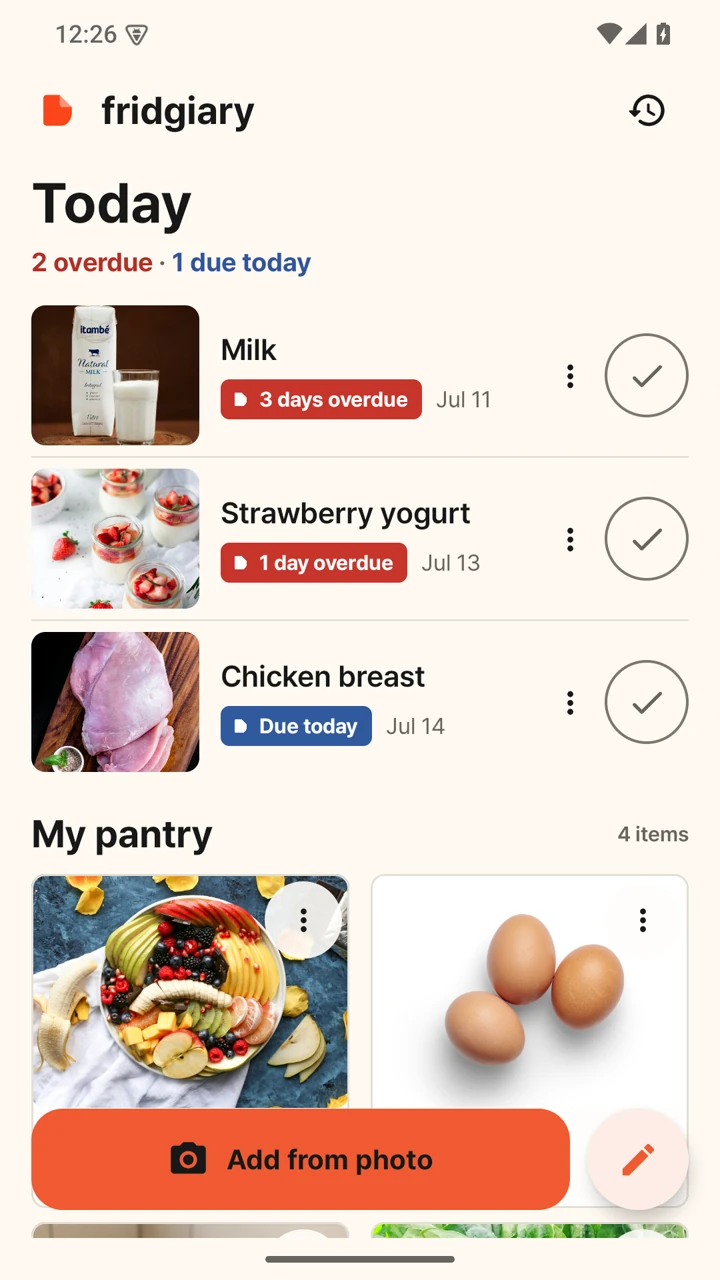
fridgiary keeps the next dated item visible without a household database.
Photograph a package or enter an item manually, confirm the date yourself, and see what has less time remaining. Records and package photos stay on the Android device.
- Start with a package photo or a short manual entry
- Confirm every recognized date before saving
- Use reminders to bring the queue back into view
- Mark food as eaten or discarded to keep the list current
Safety comes first
A use-first queue is a planning tool, not a food-safety test.
A date reminder cannot detect temperature abuse, damaged packaging, cross-contamination, or changes after opening. Always follow the package, storage conditions, and official guidance where you live. Do not rely on appearance or smell to override a safety-related use-by date.
Practical questions
Keep the system useful without making it rigid
Is first-expiring, first-out the same as first-in, first-out?
Not exactly. First-in, first-out prioritizes when an item entered storage. A household use-first queue prioritizes the earliest relevant date, because two packages bought together can have different dates. The original label and storage instructions remain the authority.
Where should I put the use-first zone?
Choose an easy-to-see part of the correct storage area. Do not move food somewhere warmer or ignore separation rules just to make it visible. Raw meat, poultry, and seafood should remain securely wrapped or contained so juices cannot reach other food.
What changes after a package is opened?
Follow the after-opening instruction on the package. It may set a shorter period than the printed date. If you record an opened-on date, treat it as additional context rather than replacing the manufacturer’s instruction.
Official sources
The routine is grounded in current food-safety guidance.
Android
Put one dated package at the top of your queue.
fridgiary is currently in Google Play closed testing.